Sell It Before You Make It: How to Earn Your First $1,000 Online With Printful
Sponsored: This article is sponsored by Printful.
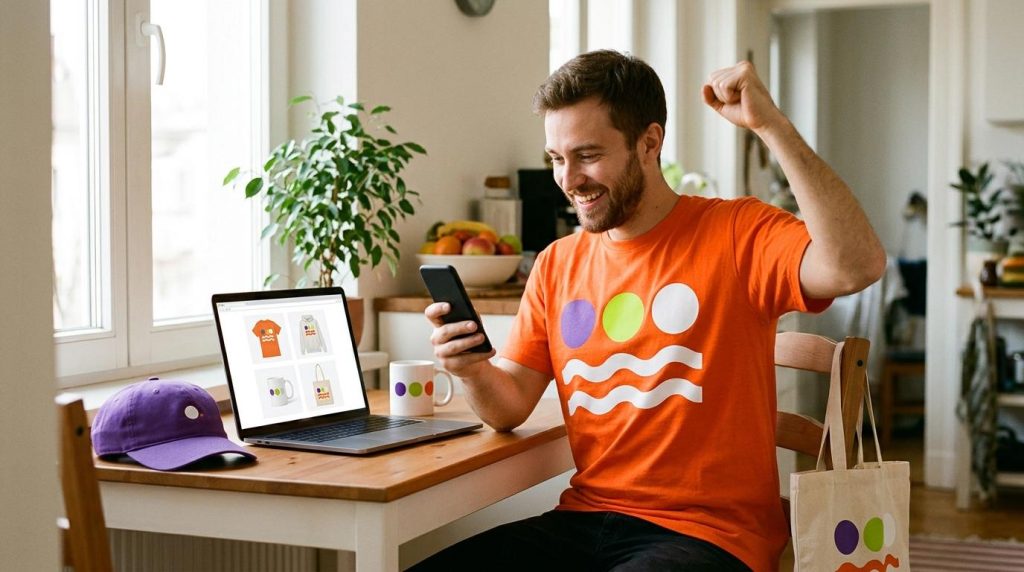
Most product businesses ask you to spend first and sell later. You order stock, wait for it to arrive, and hope people want it. If they don’t, the money is gone and the boxes stay in your spare room.
There is another order of events. You can list a product, take the sale, and only then have it made. This guide walks through how that works with Printful, what the numbers look like, and a realistic path to a first $1,000.
Why Selling First Changes the Risk
The biggest danger for a beginner is paying for products nobody buys. Ryan, the founder of UMAI Clothing, described it this way in a Printful guide: “You buy 200 t-shirts, and then only five people buy them.”
Print-on-demand removes that step. Each item is made after a customer orders it, so you never pay for unsold stock. A design that flops costs you some time and nothing more.
That does not make it easy money. You still need a product people want and a way to reach them. What changes is that you can find out cheaply.
How the Model Works
Printful prints custom products on-demand for online businesses, and ships each order to their customers around the world. Founded in 2013, Printful has delivered more than 150 million items and fulfills over 1 million items a month.
The process has five steps:
- You upload a design or make one in the free Design Maker.
- You connect an online store or marketplace. There are 22 integration partners, including Shopify, Etsy, Amazon, and TikTok Shop.
- You set the retail price.
- When a customer orders, the product is made, packed under your brand, and shipped to them.
- You pay for the product, fulfillment, and shipping on that order, and keep the difference.
The Free plan costs $0 a month, and there are no setup fees or minimum orders. If you are in the US and don’t want to build a website, you can open a Quick Store, a free online store that launches in about 10 minutes.
The Math Behind $1,000
It helps to be clear about which $1,000 you mean. There is $1,000 in sales, and there is $1,000 you keep. They are very different targets.
Here is a simple illustration with one product. Say you sell a t-shirt for $30 with free shipping. The bestselling t-shirt in the catalog starts at $10.25, and shipping one t-shirt in the US costs $4.95. Your cost is $15.20, so you keep $14.80.
- To reach $1,000 in sales, you need 34 shirts.
- To keep $1,000, you need 68 shirts.
Those figures come before taxes, store fees, payment fees, and any ads. They are an example and not a forecast. The point is that the goal becomes a number of orders you can count, and 34 orders is a target most people can picture.
A Five-Step Path to the First $1,000
1. Pick One Audience
Choose who you are selling to before you choose what to sell. Hobbies, jobs, causes, and local pride all work, because people in those groups already share jokes and symbols.
The best niche is often one you belong to. You know what the group finds funny, what it is tired of seeing, and where it spends time online.
2. Start With Two or Three Products
The catalog has 600+ products to customize, which is a trap for beginners. Start with staples such as t-shirts and hoodies, which sell all year, and put your best design on those.
Order a sample before you sell anything. Sellers on the Free plan get 20% off one sample order a month, of up to three items. You will see the print quality yourself, and you get photos for your listings.
3. Price for Profit
Work out your cost per order first, then set a price that leaves a real margin. Check what similar products sell for, and resist the urge to be the cheapest. A thin margin leaves no room for a discount code or a small ad test.
4. Get the First Ten Sales From People You Can Reach
Your first buyers will not come from search. They come from people who already know you or share your interest. Printful’s four-step guide to getting your first $1,000 in sales starts with awareness for that reason.
A few tactics from that guide cost nothing:
- Post short videos that show the product in use.
- Answer questions in forums and groups where your niche gathers, and mention your product only when it fits.
- Make a launch offer, such as free shipping, a limited edition design, or a buy-one-get-one deal.
5. Turn Buyers Into Repeat Sales
The same guide treats the sale as the start of the relationship. Ask every buyer for a review and show those reviews on your product pages. Write product descriptions that answer questions before people ask them.
Then collect email addresses. An email list is something you own, unlike a social media following. Use it to welcome new subscribers, remind shoppers who left items in their cart, and tell past buyers about new designs.
What to Expect, Honestly
This model has real limits, and it is better to know them now.
- It takes time. Printful’s own guide on how to make money with Print on Demand says consistent profit may take several months to a year.
- Margins are lower than with bulk buying, because making one item at a time costs more per unit.
- Competition is high. A generic design on a plain shirt will struggle, which is why the niche matters so much.
- Returns work differently. Because every product is made to order, there are no returns for the wrong size, the wrong color, or a change of mind. Damaged, defective, or misprinted items get a free reshipment or a refund if reported within 30 days of delivery.
- Delivery is not instant. Most orders are fulfilled in 2 to 5 business days, and shipping time comes after that.
None of this rules the model out. It means the first $1,000 is earned through steady work on designs and marketing, and not through the tool alone.
Your First Week
If you want to test the idea, a week is enough to get started:
- Day 1: Write down one audience and ten design ideas for it.
- Day 2: Create your two best designs and order samples.
- Day 3: Open a store and write clear product descriptions.
- Day 4: Work out your cost per order and set your prices.
- Day 5: Tell friends, family, and your online groups, and include a launch offer.
- Day 6: Post a short video of the product and start an email list.
- Day 7: Look at what got clicks and questions, and plan the next design.
You will not hit $1,000 in that week. You will know whether anyone wants what you made, and you will have spent very little to find out. That knowledge is what the first sale is worth, and every order after it brings the target closer.
See More Articles Related To Make Money Online
-

10 Best Ways To Make Money With a Website -
Write A Best Selling Book: 7 Strategies That Sold 2 Million Copies! -
How To Make Money Online: 15 Ways From The 30 Biggest Sites -

How to Monetize a Blog: 17 Best Strategies for 2025 -
FatJoe: SEO Services and Article Writing -
How To Increase Website Value: 21 Smart Ways That Work! -
See how much traffic your competitors are getting. -
How To Make Money Blogging: The Quickest Way To $100k -
10 Ways SamCart Will Increase Your Checkout Page Conversions -
10 Reasons Why SamCart is the Ultimate Shopping Cart Solution -
How To Increase Sales And Conversions in 2024 -
Call to Action Buttons: Best Examples and Tips -
How to Create a Website and Make Money Blogging in 2026 -
Website Optimization: 18 Strategies to Boost Sales and Traffic in 2024 -
How To Sell A Website For The Most Money Possible -
The Best Website Broker for 2024 -
9 Things Most Sales Pages Are Missing (fix these today to increase conversions!) -
How to Create a Killer Offer That Converts Like Crazy! -

Email Autoresponders: Use this strategy to make more money -
OptiMonk Review – The Best PopUp Software For Getting Email Subscribers!